





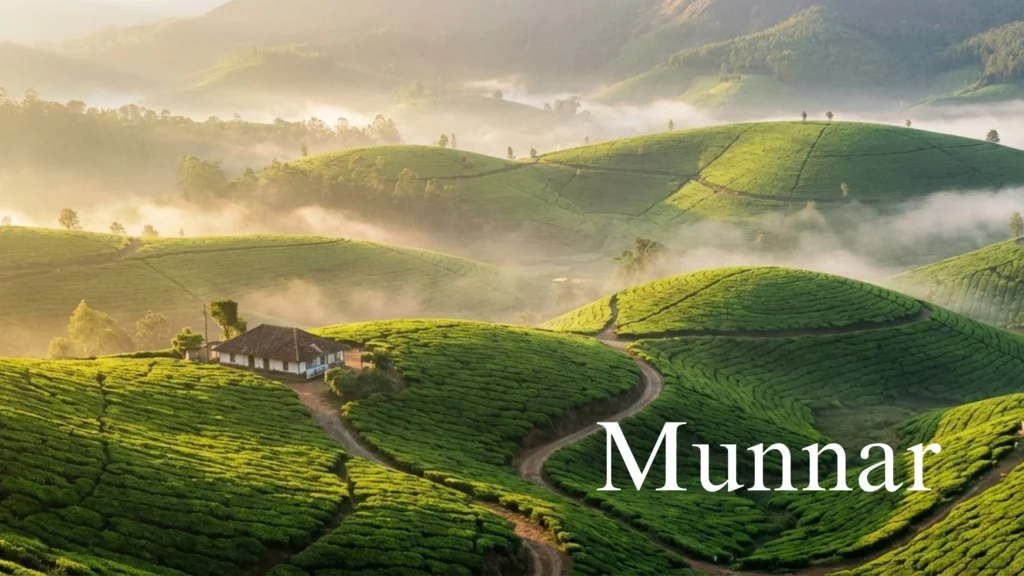
Munnar is a well-known hill station located in Kerala’s Idukki district, set within the Western Ghats mountain range. Famous for its expansive tea plantations, cool climate, misty hills, and rich biodiversity, Munnar is one of the most visited and ecologically significant destinations in South India.This guide explores the geography, history, tea heritage, biodiversity, tourist attractions, climate, and travel essentials of Munnar, offering travellers a deeper understanding of the hill station before planning a visit.
Location and Geography of Munnar
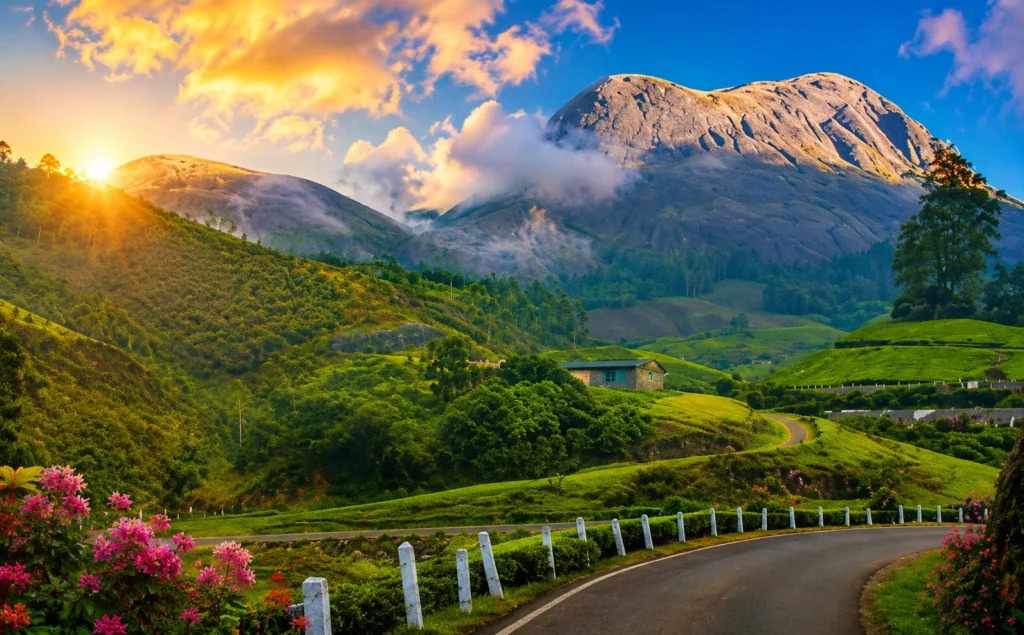
Munnar lies at an average altitude of 1,600 metres above sea level, making it one of the highest hill stations in Kerala. The town is situated at the confluence of three rivers – Muthirapuzha, Nallathanni, and Kundala. The name “Munnar” is derived from Malayalam and means “three rivers.”
Geographically, Munnar forms part of the Western Ghats, a globally recognized biodiversity hotspot. Its location within the high ranges of Idukki district gives the region a cool climate, rolling terrain, and access to forested landscapes, rivers, and grasslands.
Natural Landscape and Climate
The most defining feature of Munnar is its rolling hills covered with tea plantations, which stretch across valleys and mountain slopes. These plantations are interspersed with dense forests, waterfalls, streams, and panoramic viewpoints.
Munnar experiences a cool and pleasant climate throughout the year. Mist often settles over the hills during early mornings and evenings, particularly at higher elevations. The clean mountain air and calm surroundings contribute to Munnar’s reputation as a peaceful retreat from urban environments.
Historical Background and Cultural Roots
Before modern development, the region around Munnar was inhabited by the Muthuvan tribal community, one of Kerala’s indigenous groups. For centuries, these communities depended on forest resources and followed traditional ways of life in relative isolation.
Munnar remained largely unexplored until the late 19th century, when European planters identified its potential for tea cultivation. In the 1880s, tea estates were established by British planters, including A. H. Sharp, leading to large-scale plantation development. Tea cultivation soon became the backbone of Munnar’s economy and shaped its settlement patterns and cultural identity.
Tea Plantations and Tea Heritage of Munnar
Tea plantations are central to Munnar’s identity and landscape. The region’s altitude, rainfall, and climate create ideal conditions for producing high-quality tea.
A key attraction for visitors is the Tea Museum at the Nallathanni Estate, managed by Tata Tea. The museum showcases the evolution of tea production in Munnar through:
- Antique tea-processing machinery
- Historical photographs
- Artifacts from the plantation era
The Tea Museum provides valuable insight into how tea cultivation transformed Munnar into a major plantation region in South India.
Flora, Fauna, and Biodiversity
Neelakurinji Flower
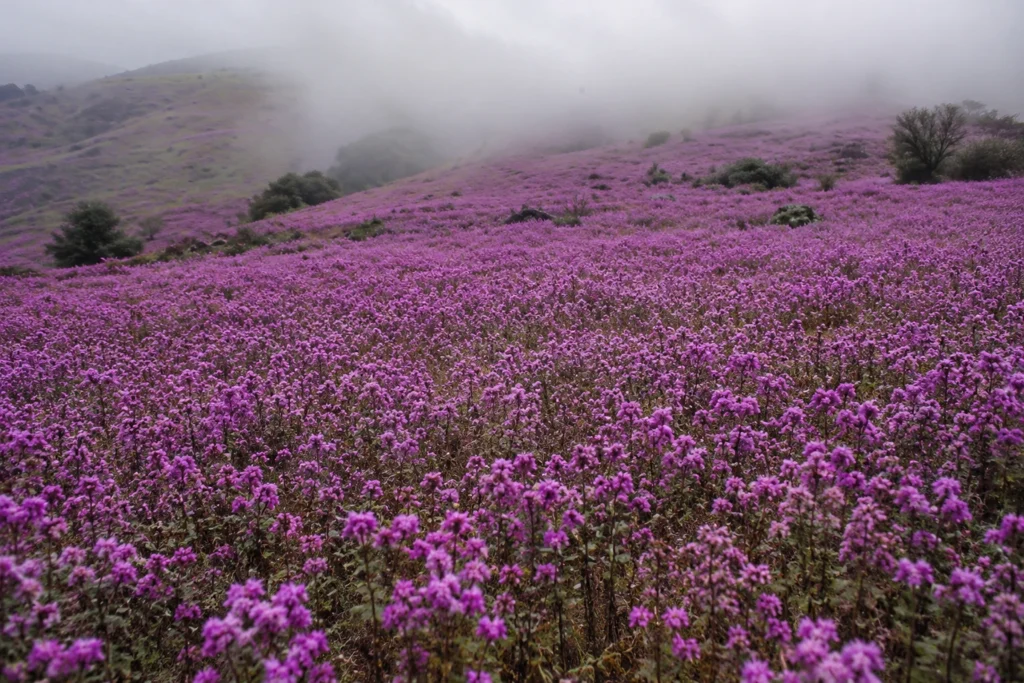
Munnar is famous for the Neelakurinji, a rare flowering plant that blooms once every 12 years. During the blooming season, hillsides around Munnar turn blue, creating a unique natural phenomenon found only in parts of the Western Ghats.
Eravikulam National Park
Located close to Munnar, Eravikulam National Park covers around 97 square kilometres. The park protects high-altitude grasslands and shola forests and is best known as the natural habitat of the endangered Nilgiri Tahr. It is also one of the main regions where Neelakurinji blooms occur.
Anamudi Peak
Anamudi Peak, situated within Eravikulam National Park, is the highest peak in South India, rising over 2,700 metres above sea level. It is a significant geographical landmark and an important part of the Western Ghats ecosystem near Munnar.
Best Time to Visit Munnar
- September to March: Pleasant conditions for sightseeing and outdoor activities.
- April to May: Pleasant summer temperatures, popular among families and honeymooners
- June to August: Monsoon season with lush greenery and fewer tourists
Each season offers a different experience of Munnar’s landscape and climate. Understanding the Munnar weather helps travellers choose the best time to visit.
Major Tourist Attractions Around Munnar
Some of the most popular attractions near Munnar include:
- Mattupetty Dam, is famous for its peaceful boating experience and beautiful surrounding landscapes.
- Echo Point, where natural sound reflection occurs
- Top Station, a historic viewpoint near the Kerala–Tamil Nadu border
- Kundala Lake, a quiet mountain lake surrounded by hills
- Attukad and Lakkam Waterfalls, especially active during monsoon months
Explore the best places to visit in Munnar during your trip to the hill station.
Activities and Experiences
Visitors to Munnar can enjoy a variety of nature-based activities, including:
- Trekking in nearby regions such as Meesapulimala
- Guided walks through tea plantations
- Wildlife observation near protected forest areas
- Boating at Mattupetty and Kundala
Nature photography and birdwatching
Local Culture and Cuisine
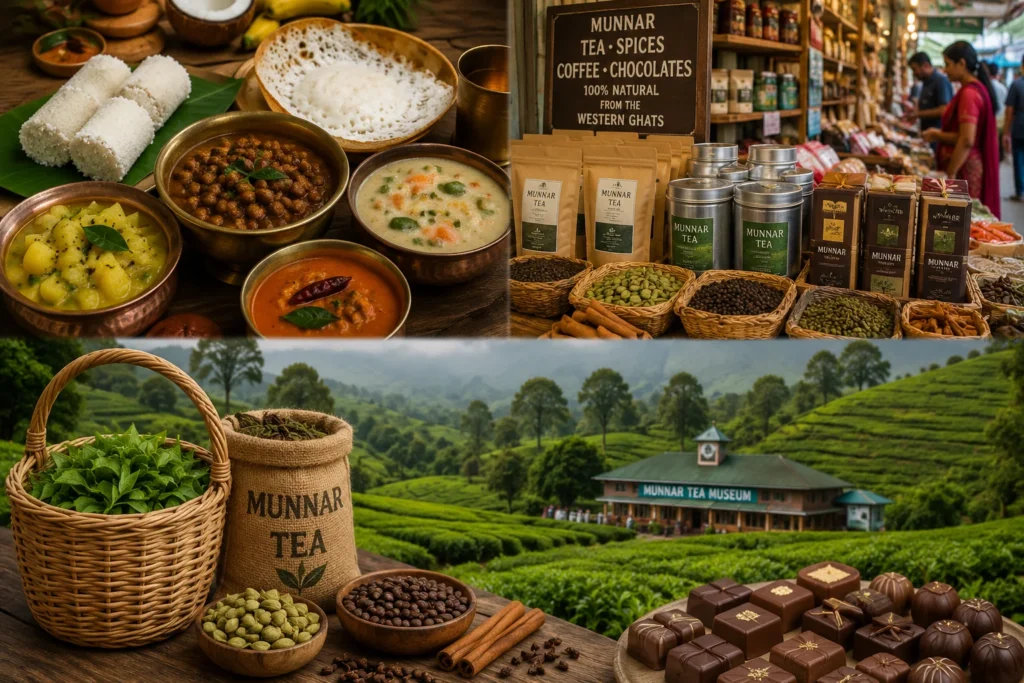
Munnar’s culture reflects a blend of traditional Kerala life and plantation heritage. Local cuisine features dishes such as puttu, kadala curry, appam, vegetable stews, and spice-based preparations. Markets in Munnar sell locally produced tea, spices, coffee, and handmade chocolates, making them popular stops for visitors.
How to Reach Munnar
- Nearest Airport: Cochin International Airport (approximately 110 km away)
- Nearest Railway Stations: Aluva and Ernakulam
- By Road: Munnar is accessible by road from Kochi, Madurai, and Coimbatore via scenic mountain routes
Accommodation Options in Munnar
Munnar offers a wide range of accommodation choices, including:
- Luxury hill resorts and plantation stays
- Mid-range hotels and boutique properties
- Budget lodges and homestays
- Eco-friendly resorts near forest areas
Practical Travel Tips
- Carry light warm clothing throughout the year
- Start sightseeing early to avoid fog at higher elevations
- Avoid plastic usage, as Munnar is an eco-sensitive zone
- Follow forest and wildlife regulations during visits
Munnar is more than a hill station – it is a region shaped by rivers, mountains, tea plantations, and protected ecosystems within the Western Ghats. Understanding the geography, history, and biodiversity of Munnar helps travellers connect with the destination beyond its natural surroundings. This guide serves as a comprehensive introduction for anyone planning to visit or learn about Munnar, one of Kerala’s most iconic highland destinations.